Local News
World Suicide Prevention Day drew out artists for Chalk the Walk Carman
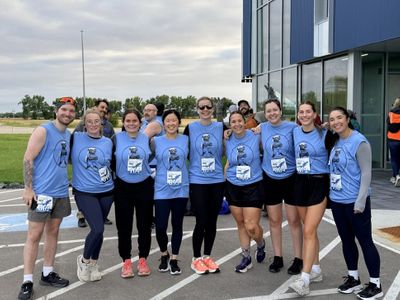
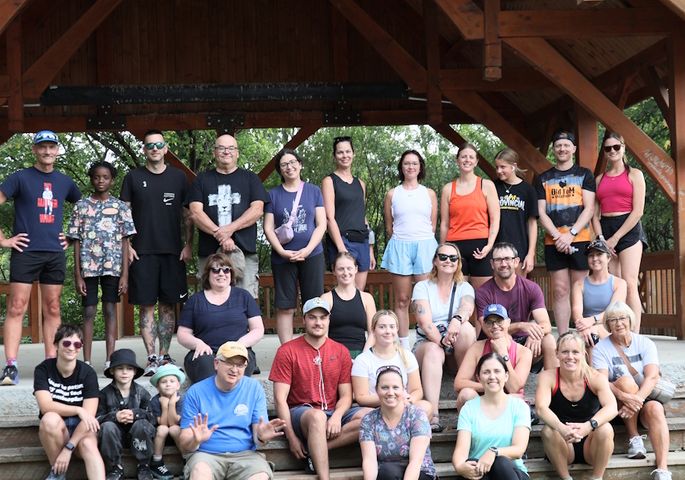
September 10th was World Suicide Prevention Day, and last Thursday night, the Carman Run and Walk Crew shifted their regular routes to take a tour of artwork drawn around town for Chalk the Walk. CWC effort enriches community Carman Wellness Connections (CWC) encouraged local businesses and residents to create an inspiring sidewalk chalk display outside their business, organization, school, church, or community space featuring messages of hope. Kindness, resilience. mental wellness, suicide awareness and prevention and community connection. Many hands at play in initiative Roots of Hope is the program that Lindsay Ainsworth (with Southern Health) is leading for the community, and that is how CWC got involved with Chalk the Walk. CWC’s Supporting Emotional Health Working Group has observed this day in the past , and this seemed like a great opportunity to bring awareness to the conversation around suicide. Carman responded, and chalk art popped up in substantial areas around the community. Runners and walkers check out art One group in particular chose to visit the various spaces reimagined in chalk art. Chris Dick, AKA Carman Runner on Instagram, leads the Carman Run and Walk Crew every Thursday. "We meet at 6 o'clock." Dick shared. "We have runners and walkers. My wife Sheila leads a walking group, and I lead the running group. "We're highlighting today World Suicide Prevention Day. Carman, along with Carman Wellness Connections, has initiated this day. There's lots of chalk art, many inspirational things, kindness and hope and resilience." So many participants The route for Thursday night's run and walk passed by many of the installations. "We're going to be highlighting some of this in our run and walk tonight, checking out some of the chalk art around town." Dick explained. "Carmen's really a good community, and when something comes together the town really bands together. I've seen a lot of businesses around town doing some chalk art, and my wife and I did a little bit too on our street, so yes it's a good community." Event a community success Carmen Wellness Connections' Communications Lead Holly Thorne-Wiebe talked about the organization's participation in Chalk the Walk. "So, there's a whole lot of groups that have been involved with this." Thorne-Wiebe shared. "It started with one group and then it morphed into what it is today. "Through Carmen Wellness Connections, we made sure to get the word out on our social media about, hey, today is World Suicide Prevention Day. It's very easy to feel alone, especially in smaller towns where you don't feel like there's the resources or these types of things that are available to you." Intent to involve the community, provide support "We really wanted to highlight the fact that you aren't alone." Thorne-Wiebe explained. "That's a lot of the messaging that we saw on a lot of these sidewalk chalks all throughout the town. The common theme is you are not alone, and you matter. "I feel that even just those small little messages of hope can really, somebody could read that and can really take that to heart and can really say, you know what, you're right. I do matter." "It's a small thing and it may seem like there's no impact, but somebody reading that, somebody seeing that who is going through a challenging time, all of these messages around town showing that you do matter really make a difference." Thorne-Wiebe added. Artists created landscape of hope Walking around Carman, clearly many got on board. There were chalk paintings everywhere. "So many, so many." Thorne-Wiebe agreed. "As long as I've been here, this hasn't been something that's been done. To see all of the organizations and the businesses throughout town who really understand that message is really heartening, because mental health for so long, it was such a stigma and something people dealt with on their own. "To see it in public and in your face, that really means something. It means that it's no longer a stigma. It's okay to not be okay. We're here to help. You are loved and you matter." Carman's many resources If you're a runner and a walker looking for community and like-minded folks in Carman, find your way to Ryall Park Thursdays around 6 PM, that's when Carman Run and Walk Crew meet up. For more information on CWC, visit their website at carmanwellnessconnections.ca.




















 Mon, Sep 14, 2:59 PM

 Full-time, Transport
 Featured